As Christians, in addition to obedience of Jesus’ teachings, a gathered body of Christians regularly performs at least two ordinances: Baptism and Lord’s Supper (Communion). Baptism signifies our union with Jesus through His life, death, and resurrection. And the Lord’s Supper signifies our communion with Christ. Some traditions add a third ordinance: feet washing. Still another tradition has up to seven “sacraments.” Typically, Protestants distinguish between ordinance (ordained command) and sacrament (a sacred rite to receive divine grace). Biblically speaking, these ordinances are performed to remember the salvific work of Jesus, and are a spiritual means of God’s sustaining grace. These practices are not just about human obedience but visible signs to confirm God’s work in and through His church.
Unfortunately, many Christians and churches underemphasize these ordinances. In a rightful effort to uphold salvation by grace and not works, Christians can minimize the meaning of Christian ordinances and obedience. While the ordinances are not actions to achieve salvation, they are activities that Jesus assigned for believers to follow representing His gospel. Specifically, we know that Jesus left His followers a lasting remembrance to regularly practice Communion. And ironically, Communion was to bring about unity on essentials of Jesus’ life, death, and resurrection. However, Communion has brought the church significant division. There are at least four main views regarding Communion elements.[1]
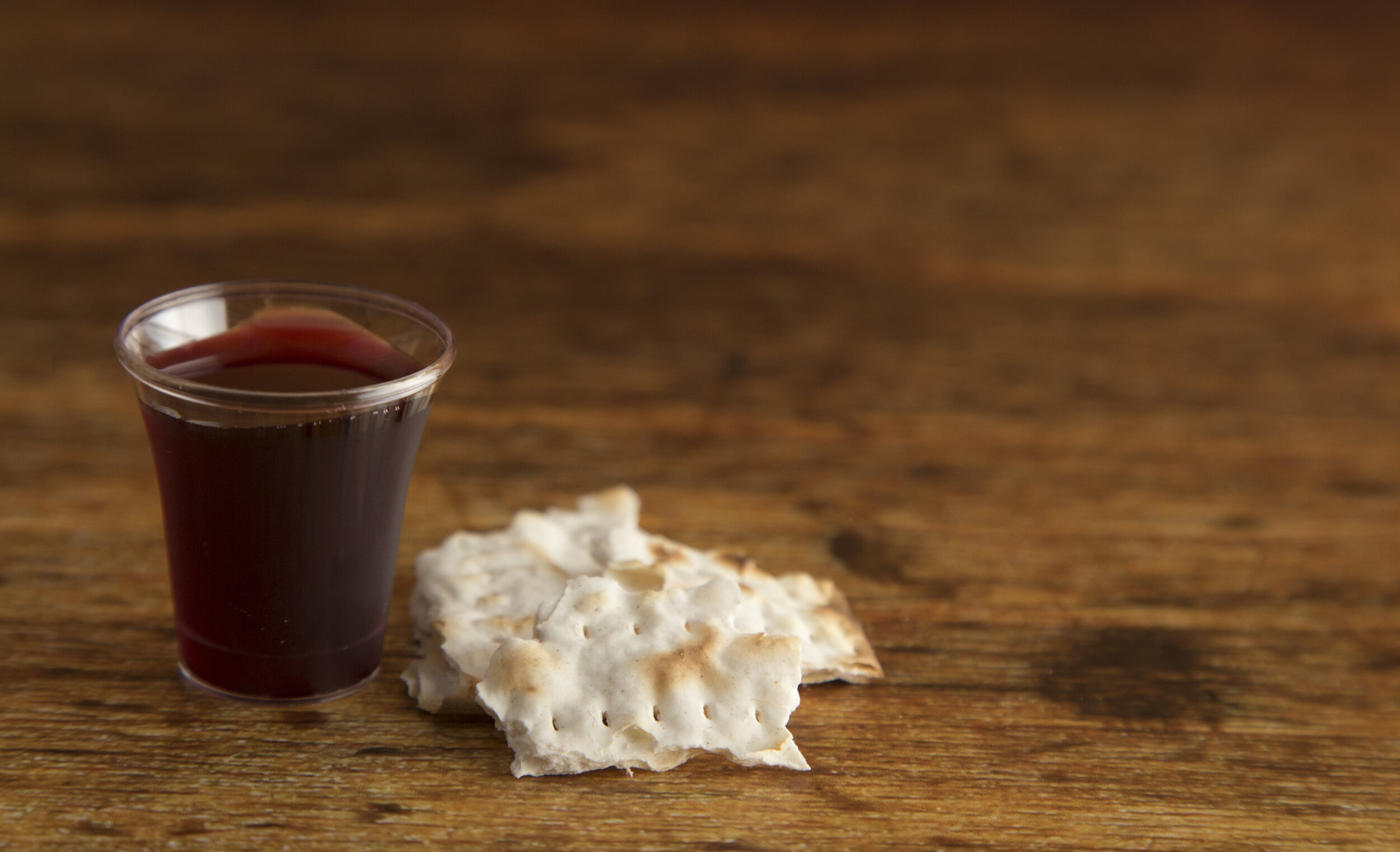
- Roman Catholicism teaches “transubstantiation,” which is the idea that the physical elements of the bread and wine are transformed into the actual body and blood of Jesus. So, when a person consumes these elements, they are receiving Christ’s physical life. And, in their view, if someone is not receiving Communion, they are in danger of not experiencing the grace of God.
The biblical analogies that could be used to differentiate this view is the metaphorical nature of language. In the Bible God is described as a rock, a shield, a fortress, etc. Further, Jesus describes Himself as living water, light, a Shepherd, a door, a way or path, etc. Yet, we understand the distinction of God and Jesus from these metaphors with their deeper meaning. - Martin Luther sought to reform Catholicism. Lutherans affirm “consubstantiation,” – con – meaning “with” or “together.” So, Luther did not believe the substance of the elements transformed, but the life of Christ still coexisted with the elements, thus Jesus was still present in, with, and under the bread and cup. An analogy people sometimes use is a sponge full of water – the sponge or water are together but distinct.
- Another Reformer, Huldrych Zwingli, affirmed a memorial view of the bread and cup. In other words, the Lord’s Supper was an act of remembrance. Simple enough, and this is the view of many Protestants.
- Another Reformer, John Calvin, disagreed that the Communion elements changed substance, yet they were more mere symbolism. Calvin affirmed a spiritual presence and blessing in the partaking of the Lord’s Supper. The Holy Spirit nourishes believers with the promises of the gospel and sustains them in this act of worship. This view is largely present among Reformed Protestants.
Additionally, various church practices differ on who can partake of the Communion elements. When Jesus instituted the Lord’s Supper, it represented the Passover meal, which was for the covenant Jews to remember God’s deliverance from slavery in Egypt and rescue from a death plague (Exodus 12:43-51). The Jesus reinstitutes the Passover meal for all of His followers – Jew or Gentile. Further, we see the early Church and New Testament practice of all believers partaking of the Lord’s Supper: Acts 2:46; 30:7; 1 Corinthians 11:26. So, there is consensus among church tradition that the Lord’s Supper is solely for believers in Jesus Christ. While not entirely authoritative, consider additional voices from church history:
- The Didache 9.5 (written between 50-75 AD): “But let no one eat or drink of your Eucharist except those who have been baptized into the name of the Lord, for the Lord has also spoken concerning this: ‘Do not give what is holy to dogs.’”
- Justin Martyr, First Apology Chapter 66 (written between 160-170 AD): “And this food is called among us [the Eucharist], of which no one is allowed to partake but the man who believes that the things which we teach are true, and who has been washed…”
- Charles Spurgeon, Fencing the Table Sermon #2865 (preached on January 7th, 1904): “You, as sinners, have to exercise faith in Christ before you have anything to do with believers’ baptism; you have to come to Christ himself before you are qualified to come to the Lord’s table. As soon as you have, by faith, received Jesus Christ himself as your Savior, the tokens and emblems of his death will become instructive to you; but until Jesus Christ is wholly yours, hands off all these holy things!”
- New Hampshire Baptist Confession of 1883, Article 14: “We believe that Christian Baptism is the immersion in water of a believer, into the name of the Father, and Son, and Holy Ghost; to show forth, in a solemn and beautiful emblem, our faith in the crucified, buried, and risen Savior, with its effect in our death to sin and resurrection to a new life; that it is prerequisite to the privileges of a Church relation; and to the Lord’s Supper, in which the members of the Church, by the sacred use of bread and wine, are to commemorate together the dying love of Christ; preceded always by solemn self- examination.”
- Southern Baptist Convention Baptist Faith and Message 2000, Article 7: “Christian baptism is the immersion of a believer in water in the name of the Father, the Son, and the Holy Spirit. It is an act of obedience symbolizing the believer’s faith in a crucified, buried, and risen Savior, the believer’s death to sin, the burial of the old life, and the resurrection to walk in newness of life in Christ Jesus. It is a testimony to his faith in the final resurrection of the dead. Being a church ordinance, it is prerequisite to the privileges of church membership and to the Lord’s Supper. The Lord’s Supper is a symbolic act of obedience whereby members of the church, through partaking of the bread and the fruit of the vine, memorialize the death of the Redeemer and anticipate His second coming.”
On some level, every Christian tradition (Baptist, Presbyterians, Lutherans, Orthodox, Roman Catholicism, etc.) has affirmed that Communion is only for baptized believers. As Baptists, we believe the recipients of the Lord’s Supper are a) Christians, and b) who have been biblically baptized. The qualifier “biblically,” is certainly a nod to our convictions as Baptists, who believe baptism is for those who have consciously placed faith and trust in Jesus Christ as Lord of their life and Savior from their sin.[2] And specifically, we believe the biblical mode of baptism was by immersion, and infant baptism as incomplete. The very word “baptism” implies submerge or plunge, and immersion not only reflects the language of “going up from the water,” it is the best picture of the gospel affirming Jesus dying and being buried (going into water) and resurrecting (coming out of water). So, while baptism is the front door of the church and a symbolic reflection of saving faith, the Lord’s Supper is a back door of the church. It’s the means by which the church and its leadership holds Christians accountable for obedience to the Lord’s commands – starting with baptism, but onward to other sins to not eat or drink in an unworthy manner, thus resulting in God’s judgment (cf. 1 Corinthians 11:17-34).
Some Christians may accuse us of being legalistic – upholding religious rituals and traditions over the gospel of free grace. I understand the perspective, but here is why I do not believe we are in error. First, we are open to correction based upon Scriptural chapter and verse, but this is what we believe the Bible teaches. Second, we do not believe that baptism is a requirement for salvation. Faith in Jesus Christ as the Son of God and sinless substitute with repentance of our sin is the only means of grace necessary for God’s promise of salvation. Like the thief on the cross, our only hope is in Jesus – not our baptism. Yet, we do believe baptism reflects our salvation, along with non-baptism as disobedience to the Lord Jesus’ command. Third, our communication to “fence the table” and invite others to partake of the Lord’s Supper trusts the Holy Spirit to apply truth to everyone. We do not believe truth is subjective, but we do trust that God has given every believer equal access to the Holy Spirit, and ultimately will solely stand before the Lord based upon their individual conscience; whatever is not of faith, is sin (cf. Romans 14:23). In other words, our Elders are accountable to clearly communicate our biblical convictions, but neither they nor the persons distributing the elements police individuals from partaking of the elements over this specific area. We do attempt to protect or police the elements based upon other sin or disobedient areas that are known, blatant, and unrepentant (cf. 1 Corinthians 5:11-13).
One hypothetical exception to address is how our church would treat Christians from other traditions, who were not biblical baptized – specifically paedobaptism (infant baptism). Indeed, we value fellowship with brothers and sisters from non-baptistic traditions who affirm the gospel of Jesus Christ and proclaim God’s inerrant word. There are areas and actions where we can join in worship and witness together such as some evangelistic outreaches, compassion ministries, justice activism, and other spiritual growth and learning opportunities. Yet, there are some areas and actions we have respectful disagreements, which cause us not to fully align, such as planting churches or some missional aims. In regard to sharing the Lord’s Supper with non-baptistic believers, it would be our aim for them to refrain, while also not superseding what was said in the previous paragraph. Therefore, if a decidedly paedobaptized Christian gathered with us in worship during the Lord’s Supper, we would not shame them if they did partake. In some cases, we acknowledge that such individuals have not refrained from believer’s baptism out of fleshly rebellion but theological reflection and conviction.
Pastorally, parents of children who have not yet been baptized should also withhold Communion. We understand the curiosity of children. We are even sympathetic to children who have a posture of faith and a knowledge of the things of God. Yet, even our children, along with every individual, must encounter a defining moment where they have professed Christ as Savior and Lord and genuinely repented of their sin. Once a person is ready for baptism in agreement with the church and its Elders, then they will also be ready for the Lord’s Supper.
Numerous other hypotheticals could be raised and addressed. Instead of writing about hypotheticals, we choose to offer meaningful spiritual community with contextual pastoral care. Each person has a unique story and developing faith. Know that I/we will walk with you respectfully while seeking to honor Jesus in reverence of Almighty God, with both truth and grace.
[1] See https://www.ligonier.org/podcasts/simply-put/four-views-of-the-lords-supper
[2] Consider Matthew 3:2, ff; 28:19-20; Acts 2:38-47; 8:26-39; 9:18; 10:47; Romans 10:9-10.
 Growing Godly Generations