MOTIVATE
Table Manners from previous centuries[1]
- Some people put their hands in the dishes the moment they have sat down. [Don’t.] [Only] Wolves do that.
- Do not keep your knife always in hand, as village people do, but take it only when you need it.
- Do not put back on your plate what has been in your mouth.
- Do not offer anyone a piece of food you have bitten into.
- Do not chew anything you have to spit out.
- To lick greasy fingers or to wipe them on your coat is impolite. It is better to use the tablecloth.
- It is not decent to poke your fingers into your ears or eyes, as some people do, or to pick your nose while eating. These three habits are bad.
- Do not blow your nose with the same hand that you use to hold the meat.
- To blow your nose on your hat or clothing is rustic, and to do so with the arm or elbow befits a tradesman; nor is it much more polite to use the hand, if you immediately sear the snot on your garment.
- Nor is it seemly, after wiping your nose, to spread out your handkerchief & peer into it as if pearls & rubies might have fallen out of your head.
- “There are those who teach that a boy should retain wind by compressing the belly. Yet it is not pleasing, while striving to appear urbane, to contract an illness. If it is possible to withdraw, it should be done alone. But if not, – in accordance with the ancient proverb, – let a cough hide the sound.”[2]

Regardless of the century you live in or the home you eat in, there are always table manners for you to be aware. Likewise, when Christians come to the Lord’s Table they must understand what is expected when they participate in the Supper.
EXAMINE 1 Corinthians 11:17-34
The Corinthian church had multiple problems which the letter addresses.
- Church division over leadership (1:10)
- Prideful leaders promoting their knowledge (2:1)
- Immature believers not wanting to grow in God’s word or attend Bible study (3:1-2)
- Sexually immoral church members (5:1)
- Arguments & conflict going to court (6:1)
- Marriages having pressing problems that challenge their endurance (7:10-11)
- Turning good things into God-substitutes (8:1)
- Promoting preferences and opinions over biblical convictions (9:19)
- Selfish and inward focused worship services that ignored relating truth to outsiders (14:16, 33)
- False ritual practices and prayers for the decease; which have no relevance (15:29)
- And finally, rude and narcissistic behavior while practicing the Lord’s Supper (11:20-21)
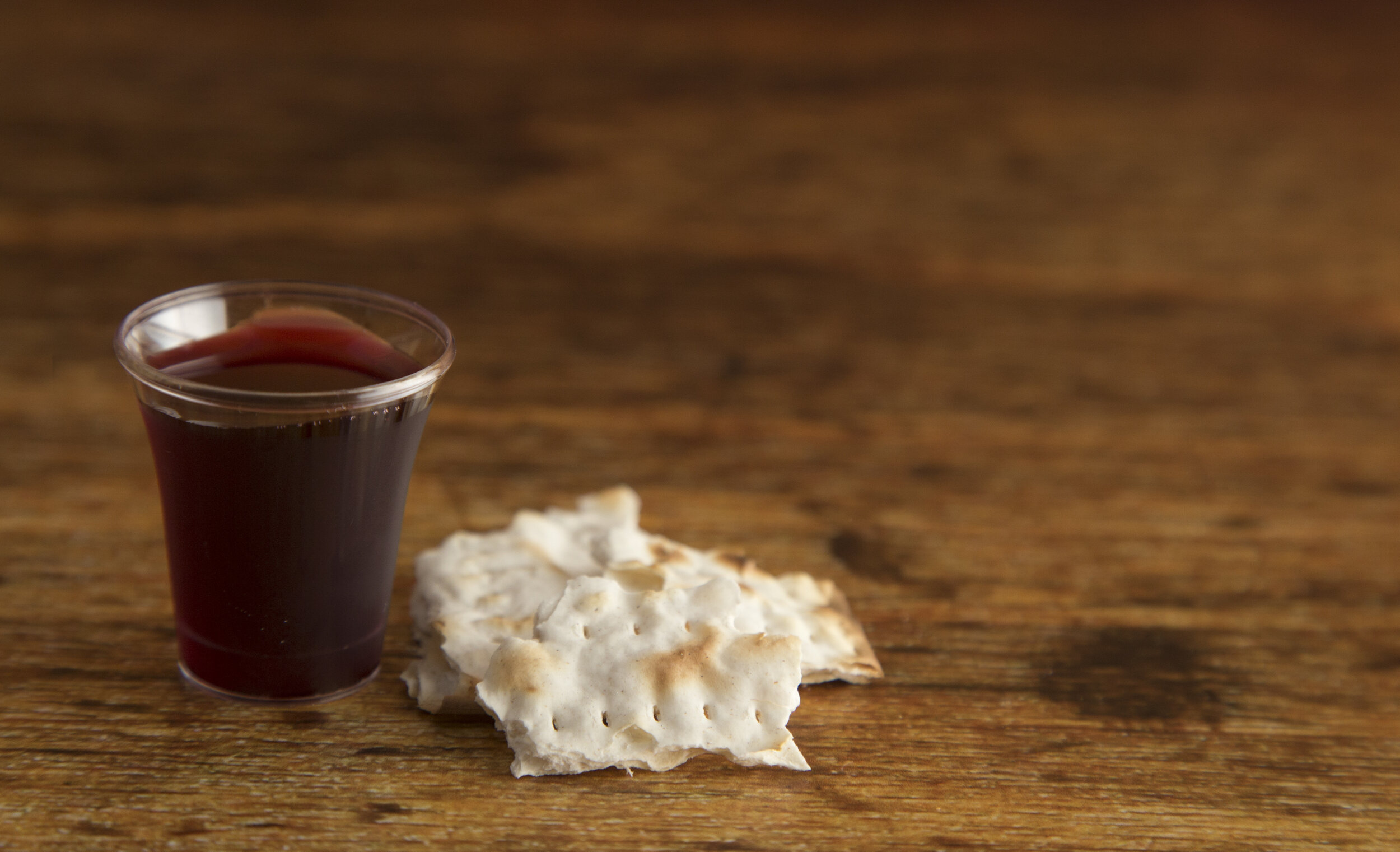
The Lord’s Supper is not an insignificant aspect of the Christian life or church practice. Jesus commanded His followers to obey His teachings, and there were certain actions – ordinances – that He gave to the church.
The Lord’s Supper is not an insignificant aspect of the Christian life or church practice.
Church history and Baptist practice have differed on the number of ordinances.
- Some suggest 7: baptism, confirmation, Eucharist, penance, extreme unction, holy orders (priesthood), matrimony.
- Others may add feet washing, the holy kiss, and even for women: head coverings.
- While Protestants/Baptists affirm many commands of Jesus, we believe in two ordinances – institutions that Jesus practiced and promoted to followers.[3]
This ordinance goes by different names: Communion [Participation] (1Cor 10); Lord’s Supper (1Cor 11:20); The Cup & Bread (1Cor 10:16-17); Breaking of bread (Ac 2:42; 20:7); Eucharist or Thanksgiving (Lk 22:19), and even The Lord’s Table and agape meal by the early church.
In 1 Cor 11, we have the primary passage on the Lord’s Supper that explains the words of Jesus. Paul is also condemning and correcting the church’s practices on the ordinance by offering 3 positive table manners and how we can remember Jesus in the Lord’s Supper (1 Cor 11:17-34)
17But in the following instructions I do not commend you, because when you come together it is not for the better but for the worse. 18For, in the first place, when you come together as a church, I hear that there are divisions among you. And I believe it in part, 19for there must be factions among you in order that those who are genuine among you may be recognized. 20When you come together, it is not the Lord’s supper that you eat. 21For in eating, each one goes ahead with his own meal. One goes hungry, another gets drunk. 22WHAT!?! Do you not have houses to eat and drink in? Or do you despise the church of God and humiliate those who have nothing? What shall I say to you? Shall I commend you in this? No, I will not! 23For I received from the Lord what I also delivered to you, that the Lord Jesus on the night when he was betrayed took bread, 24and when he had given thanks, he broke it, and said, “This is my body, which is for you. Do this in remembrance of me.”3 25In the same way also he took the cup, after supper, saying, “This cup is the new covenant in my blood. Do this, as often as you drink it, in remembrance of me.” 26For as often as you eat this bread and drink the cup, you proclaim the Lord’s death until he comes. 27Whoever, therefore, eats the bread or drinks the cup of the Lord in an unworthy manner will be guilty concerning the body and blood of the Lord. 28Let a person examine himself, then, and so eat of the bread and drink of the cup. 29For anyone who eats and drinks without discerning the body eats and drinks judgment on himself. 30That is why many of you are weak and ill, and some have died. 31But if we judged ourselves truly, we would not be judged. 32But when we are judged by the Lord, we are disciplined so that we may not be condemned along with the world. 33So then, my brothers, when you come together to eat, wait for one another—34if anyone is hungry, let him eat at home—so that when you come together it will not be for judgment. About the other things I will give directions when I come.
We remember Jesus in the Supper by sharing unity.
The word/phrase “come together” is used 5x (v.17, 18, 20, 33, 34). Communion is for the gathered church, not individualized or singular ministries.
In the case of the Corinthians, their assembling led to divisions (schismata, v.18) and differences (haireseis, v.19). This specific problem related to when they participated in eating the Lord’s Supper in an unworthy manner. The Lord’s Supper is a serious element in the corporate service of worship. The elements of bread and fruit of the vine represent Jesus’ action on the cross of his body and blood being sacrificed for the forgiveness of sins. When the Corinthians participated in this ordinance, “their meetings did more harm than good” (v.17).
Paul had no praise for the Corinthians. Unfortunately, social classes became a dividing factor in the church. Those who had much were eating plenty and indulging in sensory pleasure. Those who had little were embarrassingly left in want made to feel inferior.
- Divisions of class: have & have not’s
- Difference of belief: misunderstood Christ & Church
Again, the Lord’s Supper is not superfluous to Christianity. The fact that Paul views the ordinance as a unifying practice implies it should be taken regularly. Unfortunately, many Protestants do not practice it enough. At SPBC, we do at least 1x month and perhaps should consider more frequently.
The concept of unity has at least 3 facets
#1 Vertical Unity: Faith. The first and foremost unity one must have is with God. The Creator has designed our world with principles and instructions that we cannot ignore. And apart from the cross and resurrection of Jesus Christ, we are separated from God. The gospel of what Jesus has done is our only mediator; not our moral deeds or even religious practice.
“I need no other argument, I need no other plea;
It is enough that Jesus died, and that He died for me.”[4]
So, when it comes to the Lord’s Supper, Paul is speaking to the church made up of Christians who gather to celebrate the gospel. Therefore, the elements are only for followers of Jesus (Christians).
Additionally, we include – baptized believers, to communicate those who are living in obedience to Christ’s commands. In fact, every Christian tradition (Baptist, Presbyterians, Lutherans, Orthodox, R.C.) have affirmed that Communion is only for baptized believers.[5] In other words, a Christian should not have one ordinance without the other; both are the fruit of the gospel.
A word about Children: My salvation testimony includes growing up in church and watching Communion elements not being able to partake until awareness and applied faith in Christ. So, “Anticipation is the best preparation for appreciation.”[6]
#2 Horizontal Unity: Fellowship.
The Corinthians lacked fellowship/communion with one another. A fraction of the congregation ate while the other portion watched enviously. There were select members who were indulging in food and intoxicating on drink, and it was highly inappropriate for God’s people.
Further, Paul exhorted the believers to not consume the elements without discerning the body and thus bringing judgment upon oneself. In the words of Jesus, “if you are worshiping the Lord and there remember that another Christian has something against you, leave your gift at the altar and go be reconciled” (Mt 5:23-24).
So, a different reason than being an unbeliever that you may refrain taking Communion is that you’re holding a grudge or you’ve offended someone. But notice that Jesus says, don’t perpetually refrain worship – go reconcile and then return in the grace of God.
#3 Doctrinal Unity: Fidelity.
Note: I don’t bring this up looking to offend or make enemies. God’s word compels me to teach truth and I’m accountable to the Lord. Additionally, we live in an area surrounded by convictional confusion and doctrinal infidelity.
There are differing perspectives on the Lord’s Supper. But the differences are not comparable to likes of flavors… instead these differences divide on earth, and perhaps for some in eternity. Let me explain the views and then make application.
RCC teaching on the Eucharist (See the Council of Trent)[7]
- It is the “source and summit of the Christian life.” The sacrifice of Christ and the sacrifice of the Eucharist are one single sacrifice. “In this divine sacrifice which is celebrated in the Mass, the same Christ who offered himself once in a bloody manner on the altar of the cross is contained and is offered in an unbloody manner.” To receive communion is to receive Christ himself who has offered himself for us … The Eucharistic sacrifice is also offered for the faithful departed who have died in Christ but are not yet wholly purified, so that they may be able to enter into the light and peace of Christ… [Further:] Worship the Eucharist. In the Mass we express our faith in the real presence of Christ under the bread & wine… bowing deeply as a sign of adoration of the Lord… offering – adoration – exposing [the elements] to the solemn veneration of the faithful… The Church has a great need for Eucharistic worship… Let our adoration never cease”
So 3 responses:
#1 RCC mass is re-sacrificing Jesus each week. And this contrasts Scripture.
- Heb 9:25-28 “[Christ was not offering] himself repeatedly as the high priest enters the holy places every year with blood not his own, for then he would have had to suffer repeatedly since the foundation of the world. But as it is, he has appeared once for all at the end of the ages to put away sin by the sacrifice of himself. And just as it is appointed for man to die once and after that comes the judgment, so Christ, having been offered once to bear the sins of many, will appear a second time, not to deal with sin but to save those who are eagerly waiting for him.”
- Heb 10:14 “For by a single offering Christ has perfected for all time those who are being sanctified.”
#2 RCC Eucharist also believes your partaking the mass is offered for deceased loved ones to have a second-chance [from purgatory]. Baseless in Scripture.
#3 RCC worshiping the Eucharist is making a physical thing as a legitimate idol – contrasting Ex 20:3-4.
Ultimately, here is how we know both baptism and communion are not salvific: the thief on the cross – who only had the once and for all atonement of Christ. BUT realize, that doesn’t mean the ordinances can be rejected or ignored as commands of Jesus. They’re important just not imperative to salvation.
We remember Jesus in the Supper by sharing hope.
Paul explained the origination of the supper from the words of Jesus. Paul says he received this direction directly from Jesus; exactly how this was revealed is unsure (dream, inspiration, reading Luke’s Gospel?). As often as the bread & cup is observed the Lord’s death is proclaimed/preached until Christ’s return.
There’s a couple noteworthy emphasis.
#1 Paul instructs that churches should frequently share Communion bc it preaches the gospel. It’s promoting that salvation comes through Christ’s grace not our good works. Jesus is the bread of life. His life is the fulfillment of obedience to God that is expected for us. Jesus’ blood is the payment of disobedience toward God that is demanded from us. Jesus’ death results in our alive = it’s substitutionary atonement. S0 – – – Scripture is God’s word verbally and the ordinances are God’s word visually. The gospel is proclaimed by the preaching of Scripture and the practice of the ordinances. And this is what unbelievers need to hear and see. Communion is not a mystery of magical elements but a magnificent memorial of the hope for what Christ accomplished through His life and death.
Communion is not a mystery of magical elements but a magnificent memorial of the hope for what Christ accomplished through His life and death.
#2 Paul elaborates this hope in saying we eat the bread and drink the cup until Christ comes. This definition of a time limit is not a throw away line, but a confident promise from the Lord. To partake of the Communion elements is not only a vibrant remembrance of the past but a hopeful reflection of the future. The one whose death is proclaimed did not remain dead, and resurrection awaits all whose trust is in the Lord. Communion is a mere appetizer before the marriage supper of the Lamb (Rev 19:7).
We remember Jesus in the Supper by sharing accountability.
Paul’s last exhortation surrounding the Supper regards self-examination. The person who eats and drinks in an unworthy manner brings judgment on themselves. The reality is that no one is “worthy” of participating in the Lord’s Supper. The accountability piece is for the sin of outward identification with Christ without the inward reality or ongoing lifestyle of repentance.[8]
Again, no one is “worthy” apart from faith in Jesus. We still sin. We will mess up. We will disappoint others. We will disobey God. But, if you can sin against God without guilt, remorse, repentance, and accountability, then the declaration of being unworthy comes from God. So, Paul says, 30That is why many of you are weak and ill, and some have died. God knows.
- 1Jn 1:8 “If we say we have no sin, we deceive ourselves, and the truth is not in us.”
- Lk 8:17 “For nothing is hidden that will not be made manifest, nor anything secret that will not be known and come to light.”
- Heb 4:13 “nothing is hidden from God’s sight, all are naked and exposed to the eyes of Him to whom we must give account.”
- Nu 32:33 “Be sure your sin will find you out.”
Our accountability comes by passing the element trays one to another. We receive it from Elders to Deacons and fellow church members, expressing grace to forgive our sin and belonging to God’s family comes solely through Jesus Christ.
Jesus is our All in All
- Jesus is the Word but not literally a book.
- Jesus is light but not literally the sun or a bulb.
- Jesus is the temple of God but not literally a building.
- Jesus is water but not literally H20.
- Jesus is bread but unseen at Panera.
- Jesus is Good Shepherd but His purpose goes beyond animals.
- Jesus is the door but can’t be purchased at Home Depot.
- Jesus is Resurrection Life.
- –>He is the one who says, “Find in Me thine all in all.”
[1] The Rise of the Fork: Selections from etiquette books, 15th – 18th centuries. (From Norbert Elias, The Civilizing Process)
[2] Erasmus. On Civility in Children (1530) quoted by Richard Zacks, An Underground Education
[3] https://www.thegospelcoalition.org/essay/the-ordinances-of-the-church/
[4] https://library.timelesstruths.org/music/My_Faith_Has_Found_a_Resting_Place/
[5] See quotes from The Didache, Justin Martyr, Charles Spurgeon, and other Baptist Confessions at https://growinggodlygenerations.com/2024/04/11/fencing-the-table-amp-connecting-the-ordinances/
[6] Robbie Castleman in Parenting in the Pew, 113.
[7] Next paragraph quotes from https://www.vatican.va/archive/ENG0015/__P41.HTM#$1MF
[8] Anthony C. Thiselton, The First Epistle to the Corinthians: A Commentary on the Greek Text, New International Greek Testament Commentary (Grand Rapids, MI: W.B. Eerdmans, 2000), 890.
 Growing Godly Generations